




Are we using SL Tool right?


Have you ever noticed that sometimes a trade hits your stop-loss only to reverse and move in your original direction? It’s not always a bad entry. The market is designed so that institutions often push prices against the masses, knowing where stop-losses are likely set. Many traders lose because they treat stop-losses as just a safety net, but in reality, they’re often used against them.I believe stop-losses work best for two things:1. Protecting profits once a trade is in your favor2. Safeguarding the account from rare, catastrophic events (black swans)
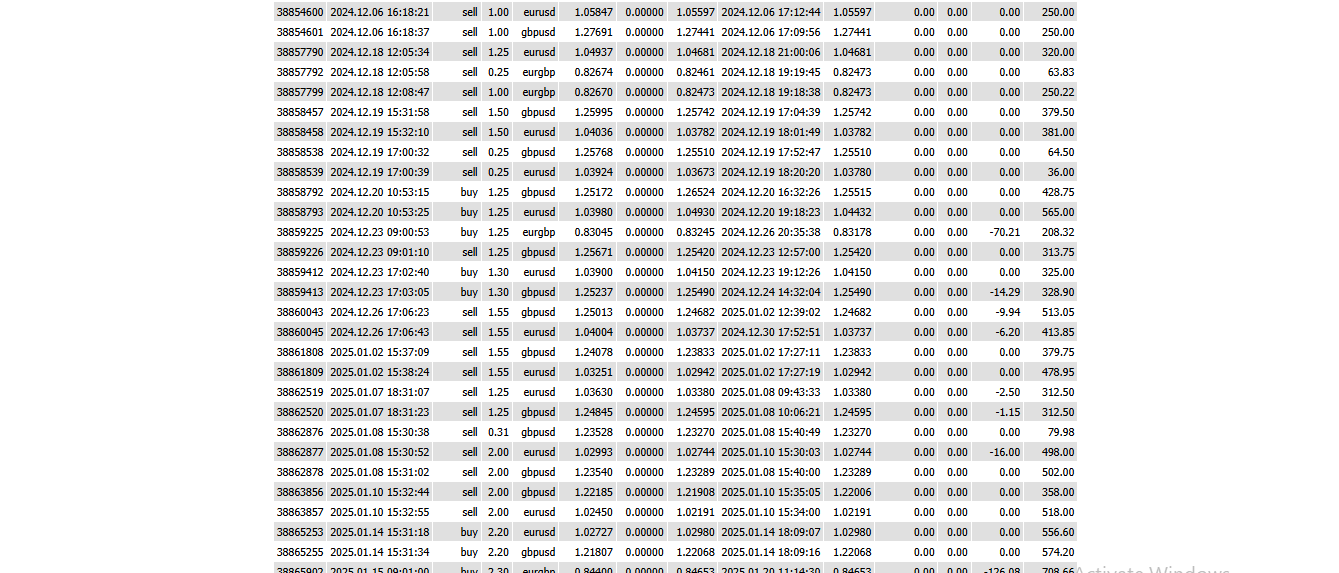
Ultimately, the best stop-loss is disciplined risk management. Position size, trade focus, and patience protect your capital far more than blindly setting a stop-loss at a “popular” level. This is what our trading model has been built around since 2022.
Risk management is probably the most effective form of stop loss. I think I will share that in my next post

I’ve noticed that behavior quite a lot too—price taps the stop and then moves exactly where the trade was supposed to go. It’s frustrating, but it shows how important stop placement and trade management really are.
One tool that has helped me manage this better is a Telegram Signal Copier. I mainly use it to execute signals automatically, but it also works well as a risk-management tool.
It has built-in trailing stop settings, and if those are configured properly, the trade isn’t forced out too early. Instead of a fixed stop sitting at an obvious level, the stop can move dynamically as the trade develops. That helps avoid some of those situations where price briefly spikes into common stop areas.
Of course, like you mentioned, position sizing and overall risk management still matter much more than the stop itself. The tools just help implement that discipline more consistently.
That’s a good point. A moving or trailing stop can definitely help manage trades dynamically.In our case, we run the system a bit differently. We keep a long range switch mainly for rare black swan events, but the real protection comes from risk management and position sizing, not the stop itself.That’s the principle our model has been built around since 2022, and the consistency we’ve shared since 2023 largely comes from that discipline.

That’s a valid point. As retail traders our risk tolerance is usually much lower, so protecting capital becomes the main priority. SL placement still matters, but position sizing and overall risk control are what really keep a trading account stable over the long run.
Right, but a trailing stop-loss can sometimes help balance that problem. It protects profits once the trade moves in your favor while still giving the market some room to breathe. The key is still position sizing and overall risk management rather than relying on the stop alone.
SL placement is actually quite simple, but traders often overcomplicate it. I usually place it based on the structure of the trade rather than just counting pips. If the setup becomes invalid, that’s where the stop should be.
Black swans tend to be rare, but when they hit, they’re the reason accounts disappear. That’s where stop losses actually prove their value more than anything else.
francescasmurphy posted:Black swans tend to be rare, but when they hit, they’re the reason accounts disappear. That’s where stop losses actually prove their value more than anything else.
You're right. We believe a trailing stop [to protect profit] and a black swan hard stop are the two most vital ways to use the SL tool. Most traders shoot themselves in the leg with it
I think traders often don’t utilize pending orders enough, and they also overlook different types of stop losses. Not every trade needs the same SL placement. Sometimes a wider stop with smaller position size works better than a tight one that gets hit by noise. Pending orders can also help avoid chasing entries and improve precision. It’s more about how you structure the trade than just placing a stop randomly.
SL should feel more like a backup plan than the main idea behind a trade. If your entry and structure are solid, the stop just protects you when you’re wrong. A lot of traders place it randomly, but it makes more sense to align it with structure or invalidation levels, otherwise you end up getting stopped out too easily.
I use price based stops, not visible on chart but when it gets to that, it automatically exists my trade. Stops is very necessary, I use stops and it helps me to make much profits, and keep them.
Counting pips alone can be misleading if it’s not tied to structure and risk per trade. A tight stop in the wrong place just gets picked off, a wide one kills R:R. Position sizing does most of the real protection anyway. Stops should make sense with the setup, not just a fixed number.