-1162026812.png)
-1162026812.png)





The Fed Faces a Delicate Balancing Act

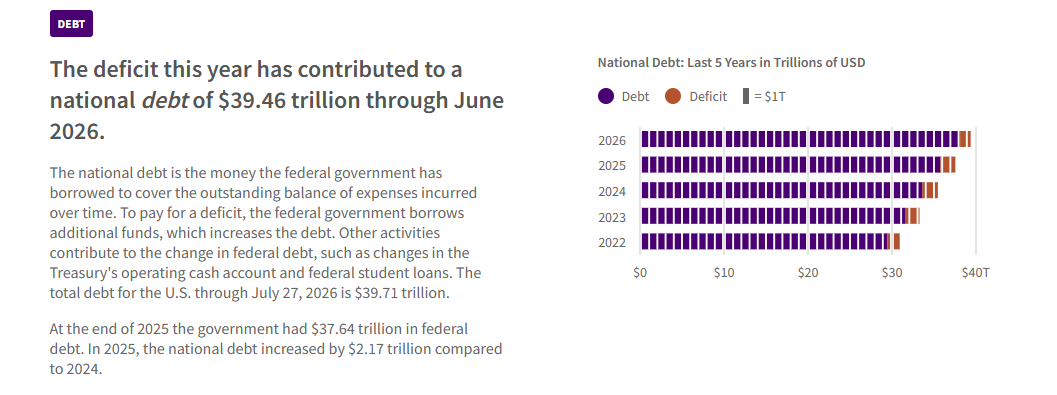
The current macroeconomic backdrop presents investors with two significant and closely interconnected themes: the rapid expansion of US government debt and growing uncertainty surrounding the Federal Reserve's next policy decision. Should the federal debt approach the $40 trillion threshold during the current quarter, it would represent more than a symbolic milestone. It would underscore the accelerating pace of government borrowing and highlight the increasing fiscal burden associated with servicing that debt. As outstanding liabilities continue to rise, higher interest rates translate directly into greater financing costs for the US Treasury.
Today's Federal Reserve meeting therefore comes at a particularly delicate moment. Inflation remains above target, while market participants have materially increased the probability of a further rate increase, with implied expectations rising from approximately 16% a week ago to around 38% ahead of today's announcement. Nevertheless, the base-case scenario continues to favor policy rates remaining unchanged. Tightening monetary policy further at this stage would risk placing additional strain on economic activity and financial markets at a time when borrowing costs are already elevated.
A rate increase would almost certainly push Treasury yields higher and raise financing costs across the economy, affecting households, businesses and the federal government alike. Against the backdrop of record government debt, such a move would also increase the cost of servicing outstanding obligations. At the same time, tighter financial conditions would likely place renewed pressure on interest rate-sensitive asset classes, particularly growth equities, real estate and other markets that have benefited from abundant liquidity over recent years.
The key takeaway is that today's meeting is likely to be defined less by the interest-rate decision itself than by the Federal Reserve's forward guidance. A firmly hawkish message would provide further support for the US dollar while keeping expectations of additional policy tightening firmly alive. Conversely, a more balanced, data-dependent stance could reinforce the view that the current policy rate is approaching its peak, offering relief across broader financial markets. In either scenario, investors should focus not only on today's decision but also on how the Federal Reserve intends to balance inflation risks, economic resilience and the rapidly expanding US fiscal debt burden.


EBC Markets Briefing | Extreme market concentration finally backfires

Bank of Japan's Historic Intervention: Tactical Victory or Temporary Relief?

Weekly Recap and Forecast: Markets rebound after major sell-off. Oil prices remain elevated as US-Iran tensions weigh on market sentiment.

The yen was boosted by intervention

Yen intervention sends shockwaves through FX markets

Microsoft Shares Rally After Strong Earnings and Azure Growth

The crypto market is on the defensive