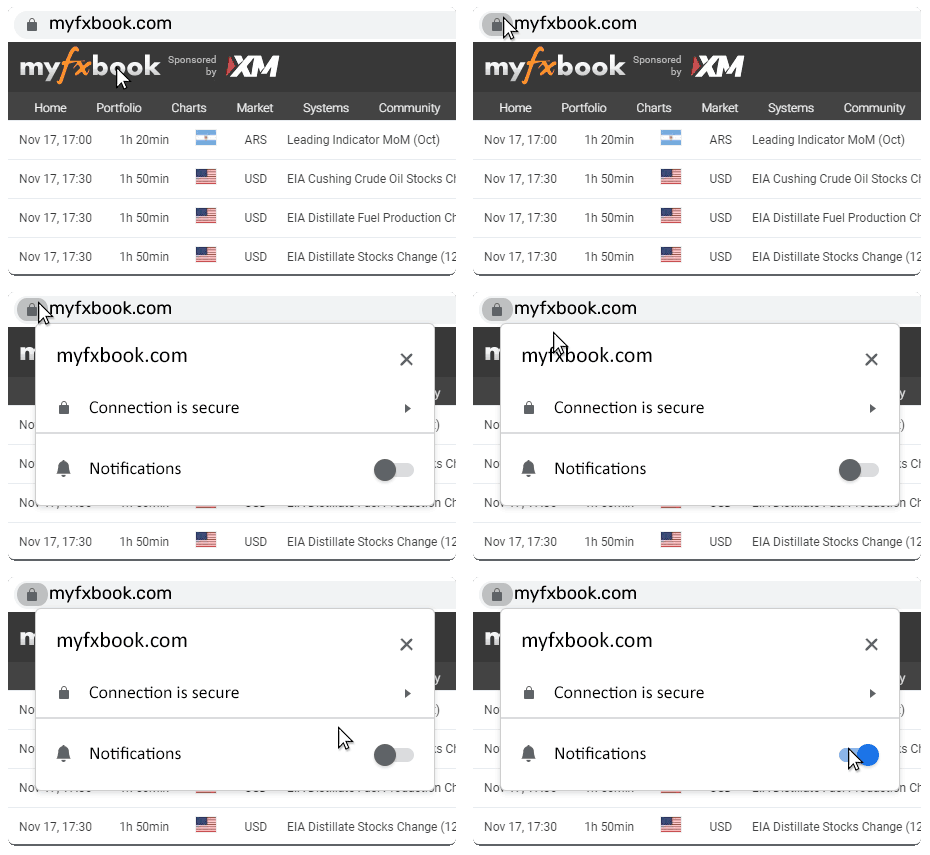





How much do trading tools really help beginners?


I’ve been thinking about how important built-in tools are for people who are still learning trading.
When someone first opens a platform, charts alone can feel confusing. But things like an economic calendar, margin calculator, currency converter, and educational materials can make the process feel more structured.
That’s one thing I noticed while looking at reviews. People often mention not just the trading environment itself, but how much the extra tools help them understand what they are doing before opening a position.
Of course, tools don’t replace experience or risk management, but they can definitely make the learning curve less chaotic.

Yeah, I’ve noticed the same. Beginners don’t usually get stuck just because they don’t have a strategy. A lot of the time they simply don’t see the full picture before opening a trade. Like, what’s happening with margin, is there big news coming up, how much risk is actually on the table, what happens if the market moves fast. So when a platform has things like an economic calendar, margin calculator, currency converter, and some learning materials in one place, it makes the whole thing feel less messy. It doesn’t magically make trading easy, of course, but it can help people slow down and think instead of just clicking buttons and hoping for the best.

AndersHansen posted:I’ve been thinking about how important built-in tools are for people who are still learning trading.
When someone first opens a platform, charts alone can feel confusing. But things like an economic calendar, margin calculator, currency converter, and educational materials can make the process feel more structured.
That’s one thing I noticed while looking into reviews. People often mention not just the trading environment itself, but how much the extra tools help them understand what they are doing before opening a position.
Of course, tools don’t replace experience or risk management, but they can definitely make the learning curve less chaotic.
When you say trading tool, you need to elaborate. I use my custom private tools , over decade old and still now for best of profits.

Trading tools can make a huge difference for beginners but only when they simplify execution, reduce emotional mistakes, and help traders stay consistent.
For example, cloud-based signal copiers now allow traders to receive and execute signals instantly across devices without needing a VPS or always-on computer. Instead of manually copying trades from Telegram or Discord, beginners can automate the process and focus more on learning risk management and market behavior.
This is exactly why platforms like TSC Infinity are gaining attention. It’s one of the first fully web-based signal copiers with a dedicated mobile app experience, allowing users to copy trades directly from Telegram to MT4/MT5/cTrader/DXTrade/Trade Locker from anywhere.

Trading tools can help beginners a lot, but only when used correctly. 📊
They mainly help with:• Better market analysis• Risk management• Faster decision-making• Identifying trends & entry points
But tools alone don’t guarantee profits. A beginner still needs:• Basic market knowledge• Discipline & patience• Proper strategy• Risk control
Good tools can reduce mistakes and improve confidence, but experience is what truly makes the difference over time.

I agree. For beginners, even simple tools can make a big difference if they help reduce confusion before entering trades.

Tools are useful, but only if they make decisions slower and more structured, not faster and more impulsive. I use calculators, calendar and correlation mostly to avoid bad trades, because the biggest beginner problem is not lack of indicators, it is bad risk before entry
ortellius posted:Tools are useful, but only if they make decisions slower and more structured, not faster and more impulsive. I use calculators, calendar and correlation mostly to avoid bad trades, because the biggest beginner problem is not lack of indicators, it is bad risk before entry
That's a great point. Many beginners focus on finding the perfect indicator, but risk management is often what makes the biggest difference. Using tools to slow down the decision-making process and filter out low quality setups can help traders stay disciplined and avoid unnecessary losses.

Without understanding how the market actually moves, why price reacts in certain areas, how liquidity works, and how traders behave, tools can easily become misleading. They should only be used as support, not as the foundation of trading

I had the same experience. At the beginning, extra tools helped me avoid many basic mistakes. Later you realize they are just helpers, and risk management is still the main thing.

SkywardFund posted:Without understanding how the market actually moves, why price reacts in certain areas, how liquidity works, and how traders behave, tools can easily become misleading. They should only be used as support, not as the foundation of trading
That's a great point. When you're starting out, it's incredibly easy to fall into the trap of "indicator overload," which actually does more harm than good by overcomplicating your decisions. The most useful tools are the ones that simplify your workflow and help you calculate risk before you click buy or sell. Honestly, for me, the biggest game-changer wasn't a fancy predictor, but just moving away from clunky trading interfaces and shifting to clean, integrated charting. I've been using mountainfinco for a while now, mostly because of their seamless TradingView integration. Having clean charts and execution in the exact same workspace makes it so much easier to stay focused and calculate margin properly without jumping between three different browser tabs. Tools should clear up the noise, not add to it.


spot on, like everyone's saying the biggest rookie trap is just diving in headfirst without even running the numbers on risk first. tools like economic calendars and margin calculators aren't there to magically predict price action, they're basically speed bumps to force u to slow down and chill out. took getting wrecked hard back in the day to realize that instead of hunting for some holy grail indicator, nailing basic math and knowing ur actual account standing matters way more. glancing at something like a currency strength meter every now and then just to catch the overall vibe is miles better than blindly staring at a single chart all day.