-1162026812.png)
-1162026812.png)





GERMANY’S AAA RATING UNDER PRESSURE💥

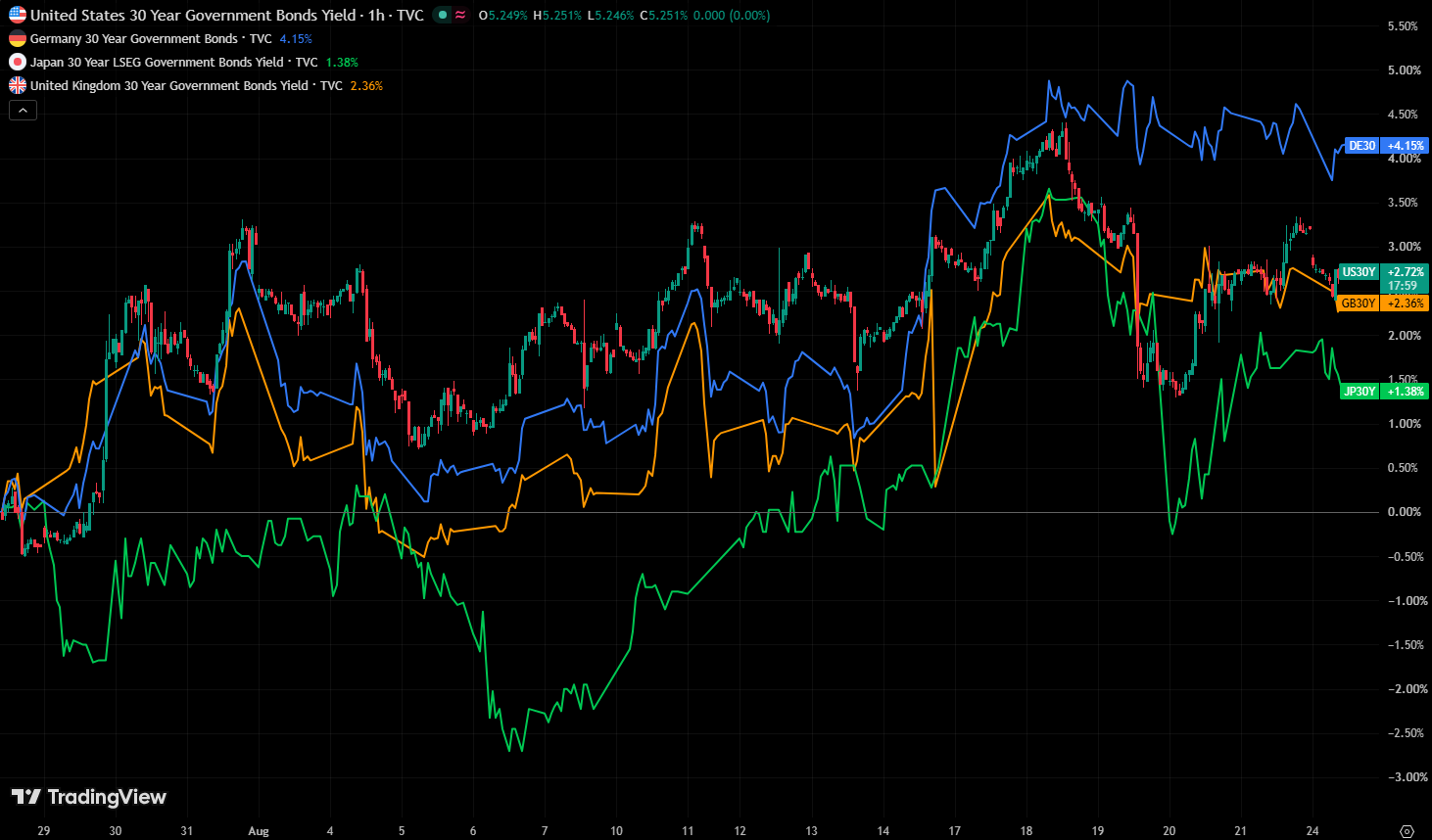 S&P, one of the world’s largest credit rating agencies, has effectively warned Germany that its top-tier AAA sovereign rating could come under review.
“The country’s rating could come under pressure if Germany’s economic performance falls significantly below our forecasts,” the agency said.
According to Bild, losing the highest credit rating could potentially lead to a material increase in Germany’s borrowing costs and, consequently, higher yields on German government bonds.
The broader context is particularly important. Among the major developed G7 economies, Germany has the lowest government debt-to-GDP ratio at 65.2%. This is almost half the level seen in the United States and Italy, and tens of percentage points below neighboring France or the United Kingdom. At first glance, Germany’s debt position therefore remains exceptionally robust.
However, the era of cheap borrowing has come to an end. Raising capital on the favorable terms previously available is becoming increasingly difficult, while debt-servicing costs are developing into a significant item of government expenditure.
For Germany, the trajectory is particularly striking:
Debt-servicing costs are expected to reach approximately €30 billion in 2026, rise to €42 billion in 2027 and climb to as much as €81 billion by 2030. By comparison, Germany spent only €4 billion on debt servicing in 2021, according to Bild.
Naturally, when compared with the fiscal and debt challenges facing Japan, the United States or Italy, Germany’s public finances still appear considerably more comfortable. However, the S&P warning matters not simply because of Germany’s current fiscal position, but because of the broader developments taking place across global sovereign debt markets.
The world’s major financial centers are effectively competing for an increasingly expensive and constrained pool of investment capital. Finance ministers across leading economies must continuously convince markets of the attractiveness of their sovereign debt, as investors become considerably more demanding in terms of yields, risk and the overall health of public finances.
This is precisely where Germany has enjoyed a significant advantage. If confidence in the public finances of the United States, Japan, France, the United Kingdom or Italy continues to deteriorate, capital could naturally begin looking for safer alternatives — particularly German and Swiss government debt.
Until now, Germany has occupied a privileged position: comparatively low government debt, relatively stable public finances and the highest possible AAA rating from the major credit rating agencies. Notably, even the United States no longer enjoys the same combination.
The question of Germany’s sovereign rating therefore extends well beyond a formal assessment of one country’s creditworthiness. Any deterioration in confidence surrounding German public finances could alter the market’s perception of German government bonds as one of Europe’s principal safe-haven assets and, in turn, influence the direction of international capital flows.
Against this backdrop, it is becoming increasingly difficult for Germany to remain insulated from the global competition for investor capital. Even discussion of a potential AAA downgrade could increase perceived risk and encourage markets to scrutinise the outlook for German debt more closely, particularly as debt-servicing costs rise rapidly.
There is also a broader European dimension. Germany remains one of the principal financial pillars of the European Union, with its economic and fiscal strength helping to support the stability of the wider European financial architecture and indirectly offset the vulnerabilities of more heavily indebted peripheral economies, including Greece, Portugal and others.
Pressure on Germany’s credit rating therefore concerns considerably more than Berlin alone. If markets genuinely begin to question the exceptional strength of German public finances, the consequences could extend much further — affecting borrowing costs, financial stability and perceptions of sovereign risk across the European Union as a whole.
This is precisely why the S&P story deserves attention. Germany is not facing a sovereign debt crisis today. Rather, one of Europe’s most important financial anchors is receiving a warning at a time when the cost of government borrowing is rising rapidly across the developed world.


Weekly Technical Outlook – USDJPY, GOLD, US100

Gold climbs amid Iran and trade uncertainties, dollar also firms

Zcash Surges as ETF Momentum Drives Crypto Rally

Stock market: Will money flow into Europe?
EBC Markets Briefing | Japanese stocks ease but robust earnings surprise

Global Currencies Hold Firm as Dollar Weakness Reshapes Market Momentum | 24th August, 2026

US Threatens Unprecedented Iran Sanctions; Markets on Edge