



Why December Markets Aren’t Quiet: Liquidity Shifts, Volatility, and Year-End Trading Dynamics


A common assumption among traders is that December markets are quiet and largely inactive due to holidays and reduced institutional participation. While trading desks do close earlier and volume declines toward year-end, this perception often overlooks how reduced liquidity fundamentally alters market behavior rather than suppressing it.
When institutional participation decreases in December, overall market depth declines. Liquidity providers scale back activity, and fewer participants are available to absorb order flow. In such conditions, even moderate transactions can generate outsized price movements. This shift explains why December markets frequently exhibit sharp intraday swings, sudden gaps, and short-lived directional moves rather than smooth price action.
Holiday market volatility is often misunderstood because it does not always present as constant movement. Instead, volatility tends to appear in bursts. Markets may seem stable for extended periods, followed by abrupt price changes when liquidity thins further. This structural fragility means that price reactions to order flow become more pronounced, particularly during low-participation trading hours.
Year-end price behavior is also influenced by recurring structural flows. Portfolio rebalancing, tax-related position adjustments, and institutional year-end reporting contribute to directional pressure across equities, indices, and currencies. Seasonal behavioral patterns, including the historically observed Santa Claus Rally, are examples of how December trading activity can remain active despite reduced participation.
Execution risks become more relevant during this period. With thinner order books, spreads tend to widen and slippage becomes more frequent. Orders may be filled at less favorable prices, especially during fast-moving market conditions. These dynamics require traders to adjust expectations around entry precision, position sizing, and risk exposure.
December does not eliminate trading opportunities, but it changes how they emerge. Traders who understand liquidity mechanics and volatility behavior are better positioned to adapt their strategies accordingly. Rather than disengaging, disciplined participants often treat December as a period requiring greater selectivity, patience, and execution awareness.
www.rock-west.com


Yen slide sparks intervention warning, gold breaks above $4,400
The crypto market rebound is far from recovery

The crypto market rebound is far from recovery

Gold pushes into fresh record highs

EUR/USD: ECB Policy Stance Fails to Surprise Markets

Gold sets a record
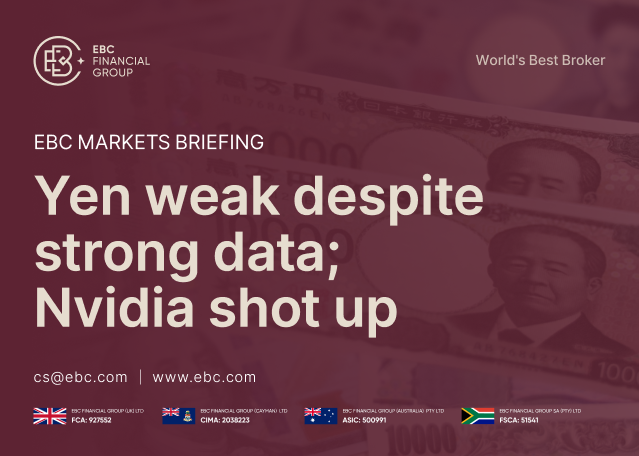
EBC Markets Briefing | Yen weak despite strong data; Nvidia shot up